

Planning your journey from Cusco to Ollantaytambo is not just about calculating distance or checking a map. In real travel conditions across the Andes, this decision defines how smoothly your trip to Machu Picchu begins.
Every day in Cusco, travelers face the same question:
“What time should I leave?”
However, behind that question lies a deeper concern. It is not only about departure time, but about avoiding stress, arriving prepared, and ensuring that nothing disrupts one of the most important connections of the entire trip.
Because once you miss a train to Machu Picchu, the experience changes completely.
This guide explains not only what time you should leave Cusco for Ollantaytambo, but also why timing matters so much in this specific route through the Sacred Valley.
many travelers choose a private transfer from Cusco to Ollantaytambo
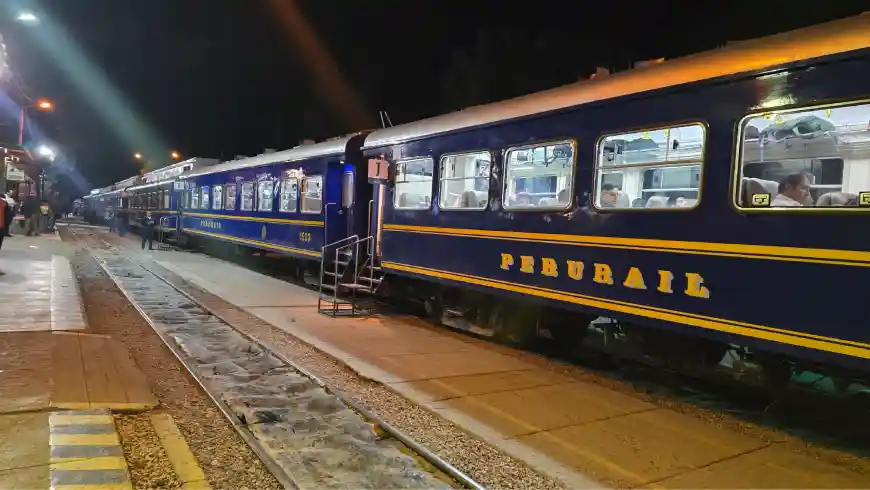
Understanding the Route: Cusco to Ollantaytambo in Real Conditions
The journey from Cusco to Ollantaytambo crosses one of the most scenic yet variable routes in the region. The road descends from the high altitude of Cusco, located at approximately 3,400 meters, into the Sacred Valley, where the climate becomes slightly warmer and the landscape opens into wide agricultural terraces and mountain views.
Although the average driving time is between one hour and forty-five minutes to two hours, this estimate does not fully reflect real conditions.
In the early morning, traffic inside Cusco can slow down departure. As the route continues, curves along the valley and occasional local traffic may affect the pace of the journey. During high travel seasons, these small delays become more noticeable.
For this reason, experienced travelers and local operators never plan using the minimum possible time.
The Critical Factor: Your Train Schedule to Machu Picchu
Arriving at Ollantaytambo is not the final goal. The real objective is to board your train to Machu Picchu without stress.
Train companies require passengers to be at the station at least 30 minutes before departure. However, in practice, arriving earlier provides a much more relaxed experience.
When travelers arrive just a few minutes before boarding, the situation becomes stressful. There is little time to orient yourself, verify tickets, or handle any unexpected issue.
On the other hand, arriving with enough time allows you to move calmly, understand the station layout, and begin the journey to Machu Picchu with confidence.
Recommended Departure Time from Cusco (Realistic Planning)
Instead of calculating your departure based only on distance, it is more effective to think in terms of total experience.
From real operations in Cusco, the safest recommendation is:
You should leave Cusco approximately two and a half to three hours before your train departure time.
This margin allows you to absorb any small delays while maintaining a calm and controlled journey.
For example, if your train departs at 9:00 a.m., leaving Cusco between 6:00 and 6:30 a.m. provides a balanced and reliable schedule. Likewise, for an afternoon train at 3:00 p.m., a departure around midday ensures that you arrive without rushing.
This approach is not about leaving excessively early. It is about leaving intelligently.
Why Travelers Often Get the Timing Wrong
One of the most common mistakes is assuming that travel time equals planning time.
Many travelers calculate two hours and consider it sufficient. However, this calculation ignores several real variables.
Traffic inside Cusco can vary depending on the time of day. Road conditions may change slightly due to local activity. Additionally, the simple act of organizing luggage, coordinating pickup, or departing from different areas of the city can introduce small delays.
Individually, these factors seem minor. Combined, they can significantly affect arrival time.
That is why planning with a margin is not an exaggeration. It is a practical necessity.
Early Morning Departures: A Different Experience
When trains depart early in the morning, the journey begins under very different conditions.
Temperatures are lower, the city is quieter, and visibility is reduced in certain sections of the road. At the same time, travelers are often still adjusting to altitude, especially if they arrived in Cusco recently.
Under these conditions, a well-organized transfer becomes more than a convenience. It becomes part of your physical preparation for the journey.
Traveling in a comfortable vehicle, with a punctual departure and without unnecessary stops, allows you to conserve energy and arrive at Ollantaytambo in a better state for the next stage of your trip.
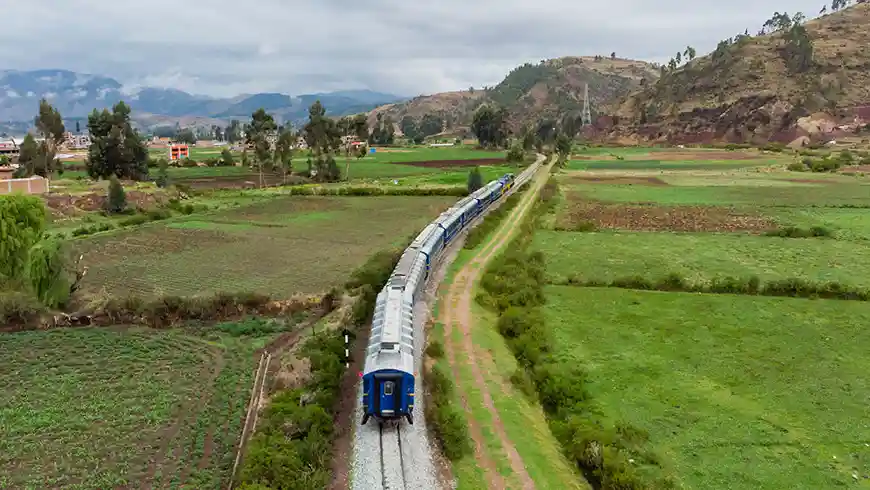
Taxi or Pre-Arranged Transport: What Makes the Difference
In Cusco, taxis are widely available and work well for short distances within the city. However, when it comes to a fixed train schedule, reliability becomes much more important.
Finding a taxi at the exact time you need, especially early in the morning, is not always guaranteed. In addition, vehicle conditions and driving styles can vary.
For this reason, many travelers prefer to arrange transportation in advance. A pre-planned transfer ensures that the vehicle is ready, the timing is calculated, and the route is understood.
This reduces uncertainty and allows the journey to unfold as expected.
Local Insight: Timing Is What Defines the Experience
From daily transport operations between Cusco and Ollantaytambo, one pattern becomes very clear.
Travelers who leave with enough time experience a calm and enjoyable journey through the Sacred Valley. They arrive without pressure and begin their trip to Machu Picchu in a positive state.
In contrast, those who leave with minimal margin often spend the entire journey watching the clock, worrying about delays, and arriving with unnecessary stress.
The road is the same for everyone.
What changes the experience is the timing decision.
Final Answer: What Time Should You Leave Cusco for Ollantaytambo
The most reliable and realistic answer is:
ou should leave Cusco between 2.5 and 3 hours before your train departure time.
This timing allows you to travel comfortably, adapt to real road conditions, and arrive at the station with enough time to prepare for your journey to Machu Picchu.
In a route where everything depends on a fixed schedule, timing is not just a detail.
It is what ensures that your trip continues exactly as planned.
If you want to avoid timing mistakes and ensure a smooth connection to your Machu Picchu train, organizing your journey with a private transfer from Cusco to Ollantaytambo allows you to travel with precise timing, local route knowledge, and complete peace of mind.
(FAQs)
The safest recommendation is to leave Cusco 2.5 to 3 hours before your train departure. This allows enough time for the drive, possible traffic delays, and arriving at the station at least 30 minutes before boarding.
The journey usually takes between 1 hour 45 minutes and 2 hours, depending on traffic and road conditions. However, travelers should always plan extra time to avoid unnecessary stress.
It is possible, but not recommended. Leaving with only 2 hours can be risky because it leaves very little margin for delays, especially during busy hours or unexpected traffic.
If you miss your train, you will need to purchase a new ticket, which can be expensive and subject to availability. In some cases, there may not be seats available on the same day.
Yes, it is generally safe. However, early morning travel requires reliable transportation, especially due to low temperatures, limited visibility, and the importance of punctuality.
If your train departs very early in the morning, staying in Ollantaytambo can reduce stress and eliminate the need for an early transfer from Cusco.
Yes, but taxis are not always reliable for fixed schedules like train departures. Many travelers prefer to arrange transportation in advance to ensure punctuality and avoid last-minute issues.