

Landing in Cusco is one of the most exciting moments of any trip to Peru. For many travelers, it marks the beginning of a long-awaited adventure through the Andes, whether the itinerary includes Machu Picchu, the Sacred Valley, Rainbow Mountain, Humantay Lake, or several days exploring the region. Yet the first hour after arriving is often underestimated, even though it can influence the rest of the journey more than many people expect.
Unlike arriving in a large international city where transportation systems and airport logistics follow familiar patterns, arriving in Cusco introduces travelers to a completely different environment. The city sits at more than 3,300 meters (10,800 feet) above sea level, meaning that from the moment the aircraft doors open, your body begins adapting to a significantly lower oxygen level. At the same time, you are navigating a regional airport, collecting luggage, meeting your driver or arranging transportation, and making the first decisions that will shape the remainder of your itinerary.
For travelers visiting Cusco for the first time, this combination of excitement, altitude, and logistics can feel overwhelming. Questions quickly begin to appear. Should you spend your first night in Cusco or continue directly to the Sacred Valley? Is it better to take a taxi or arrange transportation in advance? Should you stop to exchange money at the airport? How much time should you allow before continuing toward Ollantaytambo if you have a train to Machu Picchu the following day?
These are not simply practical questions. They are decisions that influence your comfort, your schedule, and in many cases, how well your body adapts during the first days of the trip.
From daily experience coordinating airport arrivals, one pattern appears repeatedly. Travelers who arrive with a clear transportation plan generally begin their journey in a relaxed and organized way. They leave the airport knowing exactly where they are going, how long the journey will take, and what to expect once they reach their hotel or their next destination.
On the other hand, travelers who postpone these decisions until after landing often spend their first hour comparing transportation options, negotiating prices, waiting for available vehicles, or trying to reorganize plans while already feeling the effects of altitude and travel fatigue.
The difference is rarely the flight itself.
The difference is how well the arrival has been planned before the plane touches down.
This guide explains what really happens during your first hour in Cusco, what decisions matter the most, and how to begin your trip with confidence. Rather than offering generic travel tips, it focuses on the practical aspects of arriving in the Andes, including airport logistics, transportation, altitude, and the small details that experienced travelers know can make a significant difference throughout the rest of the journey.
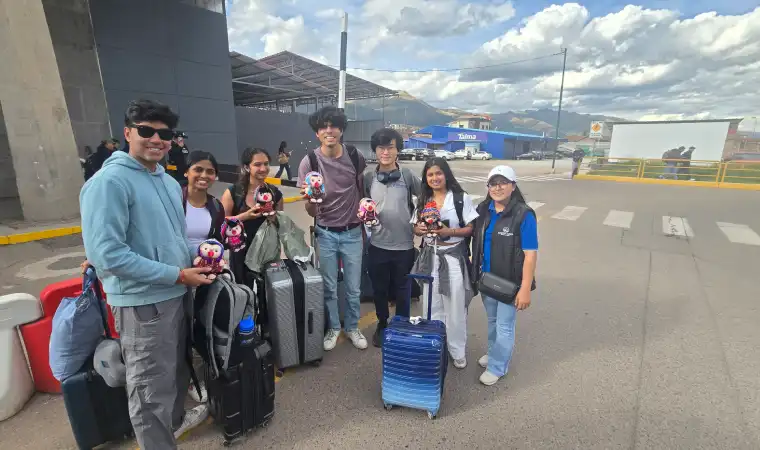
Arriving at Cusco Airport: What Really Happens After You Land
For many travelers, the most challenging part of arriving in Cusco is not the flight itself. It is everything that happens during the first few minutes after landing. While the airport is relatively small compared to major international hubs, the combination of altitude, unfamiliar surroundings, luggage collection, and transportation decisions can quickly become overwhelming, especially for first-time visitors.
The moment you step off the aircraft, your body begins adapting to one of the highest cities commonly visited in South America. Even travelers who feel perfectly well may notice that walking feels slightly different, breathing becomes heavier, or simple activities require more effort than expected. These sensations are completely normal and are part of the acclimatization process.
For this reason, the first hour in Cusco should never be rushed.
Once inside the terminal, passengers proceed toward the baggage claim area. Since Alejandro Velasco Astete Airport operates mainly domestic flights, the process is generally faster than at large international airports. However, flight schedules often overlap, which means that luggage delivery can occasionally take longer than expected during busy hours.
While waiting for your bags, many travelers begin making last-minute decisions about transportation. Some search for taxi prices, others contact their hotels, and some start comparing transfer options online. Although these choices may seem simple, making them after landing is rarely the most efficient approach.
Planning transportation before arriving allows travelers to leave the airport with a clear route instead of making decisions while tired and adapting to the altitude.
Your First Transportation Decision Can Shape the Rest of Your Trip
One of the most underestimated aspects of arriving in Cusco is how the first transportation choice influences the entire itinerary.
For some travelers, the destination is a hotel in the historic center. Others continue directly to the Sacred Valley, where the lower altitude often provides a more comfortable environment for the first night. Many also travel directly to Ollantaytambo to be closer to their train departure to Machu Picchu.
Each of these itineraries requires different logistics.
Choosing transportation without considering your final destination can create unnecessary delays, additional costs, or even force changes to the day’s schedule.
This is why experienced travelers often organize their private transfer from Cusco Airport before arriving. Rather than searching for transportation outside the terminal, they simply meet their driver and continue directly toward their destination.
Why Many Travelers Skip Their First Night in Cusco
One of the biggest changes in travel planning over the last few years is that many visitors no longer spend their first night in Cusco.
Instead, they continue directly to the Sacred Valley.
Although this decision may seem surprising at first, it is based on a practical reason rather than convenience.
Cusco sits at approximately 3,400 meters above sea level, while towns such as Urubamba and Ollantaytambo are located several hundred meters lower. For many travelers, this difference creates a noticeably easier acclimatization process during the first twenty-four hours of the trip.
Rather than remaining in the city immediately after landing, they choose to recover in the valley before beginning visits to Machu Picchu or other destinations.
This approach also simplifies transportation later in the itinerary because travelers are already closer to train stations, archaeological sites, and many of the region’s most popular attractions.
For this reason, transportation from the airport directly to the Sacred Valley has become one of the most common arrival strategies among international visitors.
The Mistakes That Often Begin During the First Hour
Not every problem that travelers experience in Cusco is caused by altitude.
Many begin with small decisions made during the first hour after landing.
Some visitors underestimate travel times between destinations. Others schedule train departures too close to their arrival time or assume transportation will always be immediately available.
Another common mistake is planning an overly ambitious first day. After a long international journey, many travelers try to explore the city, visit archaeological sites, and continue toward the Sacred Valley all within a few hours of landing.
While this may seem efficient, it often results in unnecessary fatigue and a less enjoyable experience.
The most successful itineraries usually begin with a slower rhythm. They allow enough time for transportation, hydration, acclimatization, and a comfortable arrival before beginning more demanding activities in the following days.
The First Decisions You Make Can Shape Your Entire Trip
After collecting your luggage and leaving the terminal, the next decisions may seem simple. In reality, they often determine how comfortable, efficient, and relaxed the rest of your journey will be.
Many travelers instinctively begin looking for transportation, exchanging money, or searching for mobile internet. While all of these tasks are important, they should follow a logical order rather than being done impulsively.
One of the biggest advantages of arriving with a clear transportation plan is that it allows you to focus on adapting to the environment instead of solving logistics under pressure.
When transportation has already been arranged, there is no need to negotiate fares, compare different drivers, or decide where to go while standing outside the airport. Instead, travelers can simply meet their driver, organize their luggage, and begin the journey toward their hotel or next destination.
This may sound like a small detail, but after a long flight and immediate exposure to high altitude, reducing unnecessary decisions often makes a significant difference.
Should You Exchange Money at Cusco Airport?
This is one of the first questions many international travelers ask after landing.
Although currency exchange services are available near the airport, experienced visitors rarely exchange all of their money immediately after arrival.
Airport exchange rates are often less competitive than those found in the historic center of Cusco or in the Sacred Valley. For this reason, many travelers exchange only a small amount if necessary and complete the rest later in their itinerary.
At the same time, most hotels, restaurants, and transportation companies accept credit or debit cards, reducing the need to carry large amounts of cash during the first day.
The most important priority after landing should not be finding the best exchange rate.
It should be arriving comfortably at your destination.
Staying Connected: Should You Buy a SIM Card Immediately?
Reliable internet access can make your arrival significantly easier.
Many travelers use their phones to contact hotels, check reservations, communicate with transportation providers, or navigate during the first hours of the trip.
Although local SIM cards are available in Cusco, purchasing one immediately after landing is not always necessary. Most visitors can rely on airport Wi-Fi for a short period or activate international roaming until they reach the city center, where they have more options and better prices.
Planning this step in advance avoids unnecessary delays at the airport and allows you to continue your journey more efficiently.
If You Are Continuing to the Sacred Valley, Avoid Unnecessary Stops
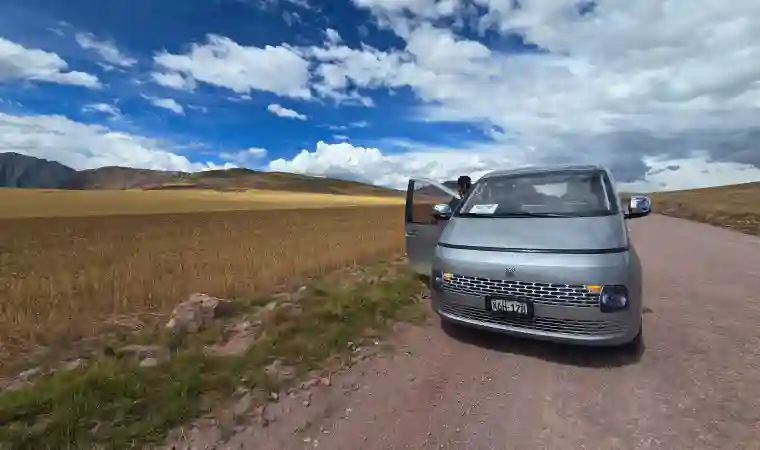
Private transportation from Cusco Airport to Ollantaytambo through the Sacred Valley
Many travelers arrive in Cusco with plans to continue directly toward the Sacred Valley or Ollantaytambo.
If this is your itinerary, the airport should simply be the starting point rather than a place to spend unnecessary time.
Every additional stop extends the journey and delays your arrival at a lower altitude, where many visitors prefer to rest before beginning more demanding activities.
This strategy has become increasingly popular among travelers who plan to visit Machu Picchu during the following days. Instead of spending the first afternoon navigating the city, they continue directly toward the valley, settle into their accommodation, and begin acclimatizing in a quieter environment.
Why Your First Hour Is About More Than Transportation
At first glance, transportation appears to be just one task among many after landing in Cusco.
However, it is the element that connects every part of the itinerary.
The time you leave the airport affects when you arrive at your hotel. Your arrival time influences how much you can rest before the following day’s activities. Good coordination can even determine whether you comfortably reach your train to Machu Picchu or begin your trip feeling rushed.
For this reason, experienced travelers rarely think about transportation as a simple transfer.
They see it as the foundation of the entire journey.
When logistics are organized from the very beginning, every destination that follows becomes easier to enjoy.
A Well-Planned Arrival Makes Every Destination Easier to Enjoy
Every itinerary in Cusco is different.
Some travelers head directly to the historic center to explore its colonial streets and museums. Others continue toward the Sacred Valley to acclimatize before visiting Machu Picchu, while many begin their adventure with destinations such as Rainbow Mountain, Humantay Lake, or the 7 Lakes of Ausangate.
Although the routes may vary, successful journeys usually have one thing in common.
They begin with realistic planning instead of last-minute decisions.
Your first hour in Cusco is not about trying to see as much as possible. It is about giving yourself enough time to adapt, organize your transportation, and arrive at your first destination without unnecessary pressure.
The Andes reward travelers who respect their rhythm.
Trying to fit too many activities into the first afternoon often leads to fatigue rather than enjoyment. On the other hand, starting the trip with realistic expectations allows your body to adapt naturally while giving you the flexibility to enjoy everything that follows.
For many visitors, the best travel memories begin not with the first attraction they visit, but with the confidence of knowing that every transfer, connection, and arrival has already been planned.
Local Planning Makes the Difference
One of the biggest advantages of organizing transportation before arriving is that every following decision becomes easier.
A driver who already knows your itinerary understands whether you are traveling to a hotel in Cusco, continuing directly to the Sacred Valley, catching a train in Ollantaytambo, or preparing for an early departure to Rainbow Mountain or Humantay Lake.
This local knowledge helps reduce uncertainty during the first hours of the trip and allows travelers to focus on the experience rather than on logistics.
Unlike generic transportation platforms, local operators work every day on the same mountain roads, understand seasonal traffic patterns, coordinate with train schedules, and adapt to changing travel conditions throughout the region.
These details often remain invisible when everything goes according to plan.
However, they become invaluable when unexpected situations arise
Your Journey Starts Long Before You Reach Machu Picchu
Many travelers think their adventure begins once they arrive at Machu Picchu.
In reality, it begins much earlier.
It starts when you leave Cusco Airport, when you choose where to spend your first night, when you decide how to adapt to the altitude, and when you organize transportation between the different destinations of your itinerary.
Every one of these decisions influences how comfortable, relaxed, and enjoyable the following days will be.
Good logistics rarely receive attention because they simply work.
Yet they often become the reason why travelers can fully enjoy the Sacred Valley, board their train on time, reach Rainbow Mountain before the crowds, or return safely after a demanding day in the Andes
CONCLUSIÓN
Arriving in Cusco is much more than reaching a new destination.
It is the moment when your itinerary becomes reality.
The first hour after landing may seem ordinary, yet it is often where the foundation of the entire journey is built.
Understanding how the airport operates, allowing your body time to adapt to the altitude, making informed transportation decisions, and planning realistic travel times all contribute to a smoother and more enjoyable experience.
Rather than rushing to begin sightseeing, experienced travelers know that the smartest way to explore Cusco starts with good planning.
When transportation, timing, and local logistics are organized from the very beginning, every destination that follows becomes easier to enjoy.
Whether you are staying in Cusco, traveling directly to the Sacred Valley, connecting with a train in Ollantaytambo, or beginning a multi-day adventure through the Andes, planning your transportation before you land allows you to start your trip with confidence.
Our local team provides reliable private transportation in Cusco, airport transfers, and direct connections to the Sacred Valley, Ollantaytambo, and the region’s most popular destinations, helping travelers enjoy a smoother arrival from the very first hour.
FAQs
Collect your luggage, stay hydrated, avoid rushing, and follow your transportation plan before making additional stops or activities.
It depends on your itinerary. Many travelers continue directly to the Sacred Valley because its lower altitude often makes acclimatization more comfortable.
Yes. Pre-arranged transportation eliminates the need to negotiate prices or search for available vehicles after landing.
Most travelers leave the airport within 20 to 40 minutes after landing, depending on baggage collection and arrival traffic.
Yes. Many visitors travel directly to Ollantaytambo, especially when planning to take the train to Machu Picchu or spend their first night in the Sacred Valley.