

For many travelers, the train journey to Machu Picchu is one of the most anticipated parts of their trip to Peru. Tickets are often purchased months in advance, hotel reservations are already confirmed, and the entire itinerary depends on arriving at the station on time.
However, every year, travelers miss their trains not because of major emergencies, but because they underestimate how transportation logistics work between Cusco, the Sacred Valley, and Ollantaytambo.
The reality is that reaching Machu Picchu begins long before boarding the train.
It starts with understanding timing, transportation, and the small decisions that can determine whether your journey unfolds smoothly or becomes unnecessarily stressful.
Why Missing the Train Is More Common Than Most Travelers Think
Many visitors assume that once they have purchased train tickets, the most difficult part of the journey is already solved.
In reality, the train ticket is only one part of a larger logistical chain.
Travelers still need to coordinate transportation, hotel departures, luggage, station arrival times, and in many cases, movement between different towns in the Sacred Valley.
A delay of twenty or thirty minutes may seem insignificant during a normal day. However, when a train departure is involved, even a small delay can create serious consequences.
Unlike flights, trains to Machu Picchu operate on fixed schedules and cannot wait for late passengers.
For this reason, understanding the entire route is often more important than understanding the train itself.
Understanding Where Most Trains to Machu Picchu Depart
Many first-time visitors believe that trains depart directly from Cusco.
This misunderstanding creates confusion from the beginning.
While a limited number of services leave from the outskirts of Cusco, most travelers board their trains in the town of Ollantaytambo, located in the Sacred Valley.
This means that reaching Machu Picchu usually involves two separate stages.
First, travelers must travel from Cusco, the airport, or their hotel to Ollantaytambo.
Only then can they continue by train toward Aguas Calientes.
Because of this, transportation to Ollantaytambo becomes one of the most important parts of the journey.
The Biggest Mistake: Underestimating Travel Time
One of the most common reasons travelers miss their train is assuming that the drive to Ollantaytambo will take exactly as long as a navigation app suggests.
Mountain roads in the Andes do not always behave predictably.
Traffic leaving Cusco, road maintenance, weather conditions, and seasonal congestion can all affect travel times.
While the journey often takes between one hour and forty minutes and two hours, experienced travelers understand that transportation should always include a safety margin.
The goal is not simply arriving at the station.
The goal is arriving calmly.
Rushing through the station after a stressful drive is not how anyone wants to begin a visit to Machu Picchu.
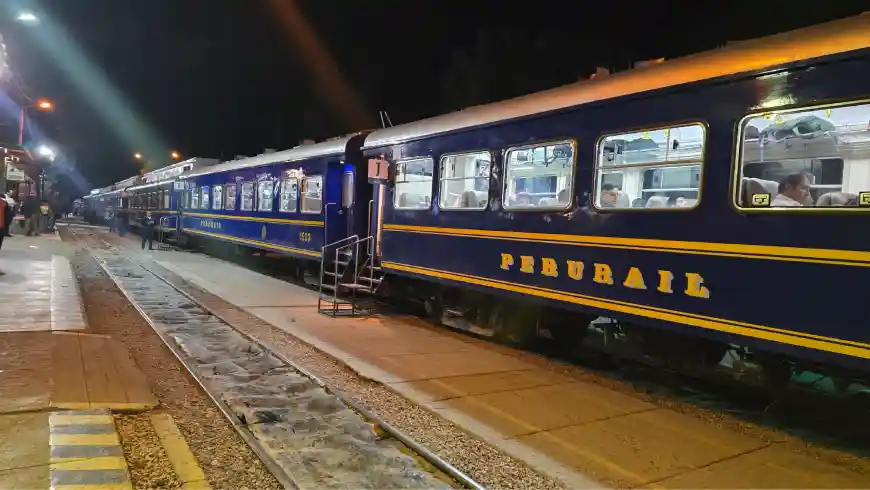
Why Arriving Early Is Always the Safer Strategy
Many travelers ask how early they should arrive at the station.
Although every itinerary is different, arriving at least thirty to forty-five minutes before departure usually provides a much more comfortable experience.
This extra time allows travelers to locate the correct platform, organize luggage, verify tickets, and avoid unnecessary stress.
More importantly, it creates flexibility if something unexpected happens during the drive.
In the Andes, flexibility is often the difference between a smooth journey and a missed connection.
Transportation Choices Can Determine the Outcome
The way travelers reach Ollantaytambo plays a major role in the reliability of the journey.
Shared transportation can be economical, but it often depends on fixed schedules, multiple passenger pickups, and less flexibility if delays occur.
When train schedules are involved, many travelers prefer a transfer from Cusco to Ollantaytambo because it provides direct transportation, predictable timing, and greater control over the day.
This becomes especially important when the train departure is early in the morning or when travelers are arriving directly from Cusco Airport.
Why Airport Arrivals Require Additional Planning
Many visitors land in Cusco and plan to continue directly to Ollantaytambo on the same day.
This is a smart strategy because the Sacred Valley sits at a lower altitude and often provides a more comfortable environment for acclimatization.
However, it also means that airport arrival times and train schedules become connected.
Flight delays, luggage collection, and airport traffic can all affect timing.
For this reason, travelers frequently organize a private transfer from Cusco Airport to Ollantaytambo rather than relying on last-minute transportation decisions.
Planning ahead creates a smoother transition between the airport and the train station.
The Advantage of Staying in Ollantaytambo the Night Before
Experienced travelers often choose to spend the night in Ollantaytambo before their train departure.
This strategy eliminates most transportation uncertainty on the day of travel.
Instead of waking up in Cusco and making the journey early in the morning, travelers begin the day already within walking distance or a short drive from the station.
In addition to reducing stress, this approach allows visitors to explore one of the most fascinating towns in the Sacred Valley before continuing toward Machu Picchu.
What Happens If You Miss Your Train?
Missing a train can create significant complications.
Depending on ticket availability, travelers may need to purchase new tickets, modify entry schedules, or adjust hotel reservations.
During high season, finding alternative train seats on the same day may be difficult.
This is why prevention is far easier than solving the problem afterward.
A well-planned transportation strategy costs far less than replacing train tickets and reorganizing an itinerary.
Final Thoughts: Machu Picchu Starts Before the Train
Many travelers focus all their attention on Machu Picchu itself.
However, the experience often depends on what happens before reaching the station.
Good planning, realistic timing, and reliable transportation create a smoother journey and allow travelers to focus on enjoying one of the most extraordinary destinations in South America.
The train is not simply transportation.
It is the connection between your planning and your experience.
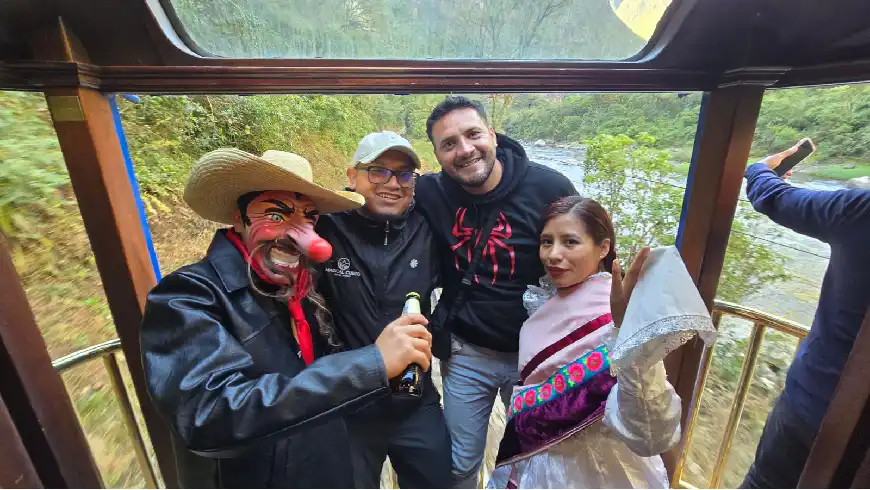
If your itinerary includes a train from Ollantaytambo, arranging transportation in advance helps eliminate uncertainty and ensures a smoother connection to Machu Picchu.
(FAQs)
Most travelers feel more comfortable arriving 30 to 45 minutes before departure.
The journey usually takes between 1 hour 40 minutes and 2 hours, depending on traffic and road conditions.
Yes. Many travelers choose this option to acclimatize in the Sacred Valley and simplify their itinerary.
Private transportation offers the most predictable timing, especially when train schedules are involved.
For many travelers, yes. It reduces transportation uncertainty and creates a more relaxed start to the journey.