


Arriving in Cusco rarely unfolds exactly as planned. Even when everything seems organized, flight delays are part of the reality of traveling to the Andes, especially when connections through Lima are involved. What appears to be a minor delay during the journey often becomes a more significant concern as the arrival approaches.
At that moment, a very specific question begins to take shape in the traveler’s mind.
What happens to my transportation if my flight is delayed?
From continuous coordination of arrivals at Alejandro Velasco Astete International Airport, this situation is not occasional. It happens frequently, and the way it is handled defines whether the arrival feels smooth or unnecessarily stressful.
Cusco Airport Transfer Flight Delay: When a Delay Stops Being Just a Delay
A delay rarely feels problematic while you are still in transit. However, as the plane approaches Cusco, the situation begins to shift. The arrival is no longer just about landing; it is about what happens immediately afterward and how your Cusco airport transfer flight delay is handled in real conditions.
By the time travelers reach Cusco, they are often tired, slightly affected by altitude, and less willing to deal with unexpected decisions. The airport itself is small, and once outside, the environment quickly becomes dynamic rather than structured. Drivers offer services, prices are not clearly defined, and the process depends on quick decisions made in an unfamiliar setting.
In this context, a delay is no longer just a matter of time.
It becomes a question of control over your arrival experience
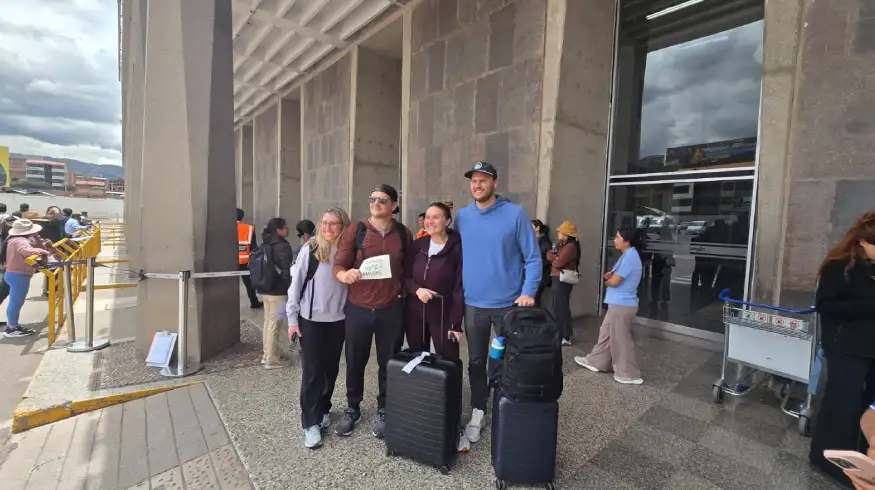
Why Transportation Planning Becomes Critical After a Delay
What most travelers do not anticipate is that Cusco does not operate like large international destinations. There is no centralized system organizing airport transfers, and the experience depends largely on how transportation has been arranged beforehand.
When a flight is delayed and no transport has been coordinated in advance, travelers arrive needing to resolve everything on the spot. This includes finding a driver, agreeing on a price, and confirming the destination, all while adjusting to altitude and fatigue.
On the other hand, when transportation is pre-arranged, the delay has a very different impact. The logistics are already defined, and the arrival becomes a continuation rather than a new decision point.
This is why many travelers rely on a private transfer from Cusco Airport, especially when they want to avoid uncertainty at the most sensitive moment of the journey.
The Role of Flight Monitoring in Real Conditions
One of the most misunderstood aspects of airport transportation in Cusco is how services respond to delays. Many travelers assume that a booking guarantees a fixed pickup time. In reality, what matters is whether the service actively monitors your flight.
When flight tracking is included, the driver adjusts to your real arrival time. This means that even if your flight is delayed by one or two hours, your pickup remains coordinated without requiring additional communication.
Without this system, delays introduce uncertainty. Travelers may arrive unsure whether someone is still waiting or whether they need to arrange transport again. This is where stress appears, not because of the delay itself, but because of the lack of coordination.
When Delays Affect More Than Just Arrival
The impact of a delay becomes more evident when the itinerary continues beyond Cusco. Many travelers do not stay in the city but move directly toward other destinations.
When the plan includes the Sacred Valley or a connection to Ollantaytambo, timing becomes more sensitive. A delayed arrival combined with unplanned transportation can affect the rhythm of the entire itinerary.
In these situations, organizing a transfer from Cusco Airport to the Sacred Valley or coordinating onward travel in advance creates continuity. Instead of reacting to the delay, the traveler moves through it without disruption.
What Travelers Realize After They Arrive
From real operations, one pattern appears consistently.
Travelers who did not organize transportation in advance often spend additional time resolving logistics after landing. They negotiate, compare options, and adapt their plans while already feeling the effects of altitude.
In contrast, travelers with pre-arranged transfers experience the delay differently. They exit the airport and continue directly to their destination, with no additional decisions required.
The delay itself is the same in both cases.
What changes is the experience.
Final Answer: Will a Flight Delay Affect Your Transfer in Cusco?
A delay does not automatically create a problem. What determines the outcome is how your transportation is structured.
- If your transfer is not connected to your flight, you will need to organize transport after arrival, regardless of the delay.
- If your transfer includes proper coordination and flight monitoring, your arrival continues as planned, even if the schedule changes.
The difference is not the delay.
It is the level of preparation behind your transport.
If you want your arrival to remain smooth regardless of delays, many travelers choose to arrange a private transfer from Cusco Airport, ensuring that their journey continues without interruption, even when flights do not follow the original schedule.
(FAQs)
Yes, when the service includes flight monitoring, the driver adjusts to your actual arrival time.
In most professional services, this is not necessary, as the flight is tracked automatically.
Transportation is still available, but having it arranged in advance ensures a smoother arrival.
They can, especially if transportation is not organized beforehand.
Yes, particularly when arrival times are uncertain or schedules are tight.